FragPunk: Farlands is now available in Global Early Access on PC and console, introducing a delivery-focused PvPvE adventure in which players share a persistent world. Xbox Wire announced the launch on November 9, 2026, describing a world where dozens of players compete and cooperate while moving valuable cargo through dangerous territory. This is an early-access release, so the useful question is not whether the game is finished, but what kind of first session its core loop is asking you to try.
Farlands combines player-versus-player danger, player-versus-environment threats, deliveries, extraction, and progression. The announcement presents the high-level concept and launch features, not a complete review or a promise about long-term balance. This guide explains the confirmed structure, how to prepare for a first run, and which early-access expectations to keep in mind.
What is FragPunk: Farlands?
Farlands is described as a delivery-driven PvPvE multiplayer adventure. PvPvE means the world combines competition against other players with environmental or computer-controlled threats. You may be trying to complete an objective while also dealing with enemies, hazards, and other players who have their own reasons to interfere. The delivery premise gives each run a clear purpose: take a contract, move through the world, and try to complete the job without losing what you carried.
Xbox says dozens of players share a persistent world. That wording suggests a space that continues to exist beyond a single isolated match, but the announcement does not provide every technical detail about world size, maximum concurrent players, server persistence, or wipe schedules. Do not assume those systems from the phrase alone. Check the current game documentation and in-game explanations after installing.
The game is available in Global Early Access on PC and console. Early Access means the playable build is available while development continues. Features can change, progression can be adjusted, servers can experience problems, and feedback can influence future updates. The launch description is a starting point for the game’s direction, not a final specification.
The core loop: deliver, survive, extract
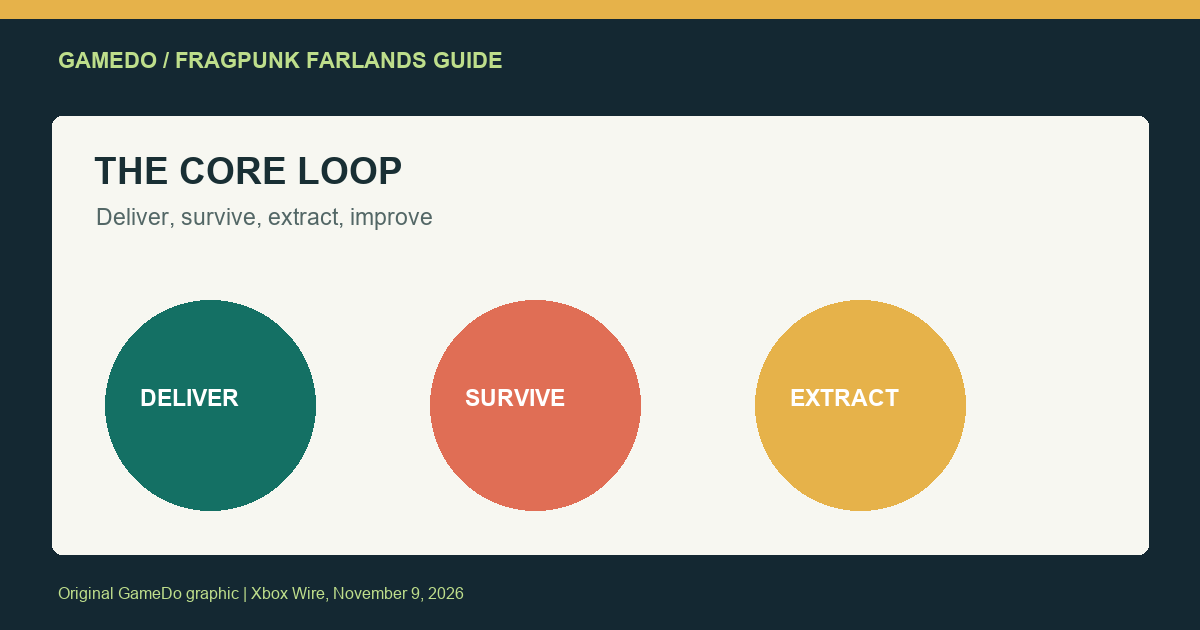
The most useful way to approach Farlands is as a risk-management loop. A delivery is valuable only if you can carry it through the danger and finish the contract. Surviving is not just about winning fights; it is about deciding when a fight is worth taking, when to change your route, and when to leave with what you have.
Other players create uncertainty. Someone who appears helpful may be competing for the same opportunity, while a rival may ignore you if your route does not affect their contract. The official announcement does not define every social or combat rule, so treat other players as a variable rather than assuming cooperation or hostility is always optimal.
The PvE layer adds another reason to avoid tunnel vision. Environmental enemies and hazards can expose your position, drain supplies, or force you into a poor route. A short fight that looks easy can become dangerous if it attracts a second group or leaves you exposed to another player. Your objective is not to eliminate everything on the map; it is to complete the delivery and return with a result.
How to prepare for a first run
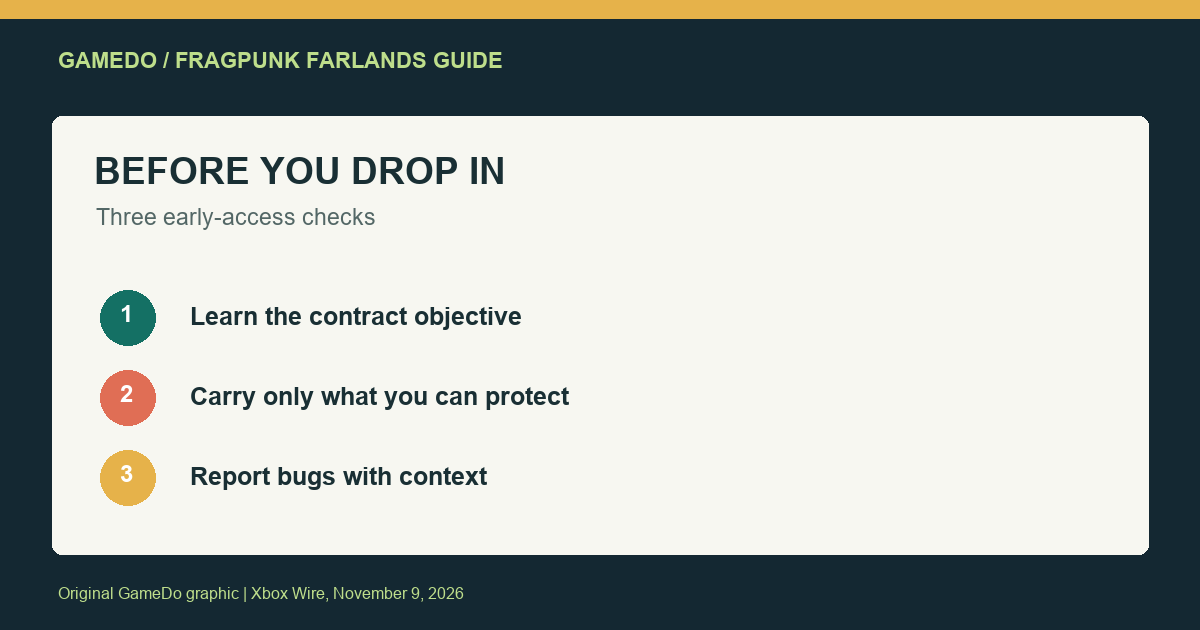
Start by learning the contract interface and the conditions for success. Identify where the delivery begins, what counts as completion, and where the game expects you to go afterward. Early-access games often teach these systems gradually, so read tooltips and mission text instead of treating the first run as a pure combat tutorial.
Keep your first loadout simple. Carry equipment you understand and can replace without frustration. The point of the first session is to learn movement, threats, extraction rules, and the value of different routes. A complicated kit can make it harder to tell whether a failed run came from poor positioning, an unfamiliar item, or a bad objective decision.
Before queuing, decide whether you are testing solo play or joining a group. If the game supports the group structure you want, voice communication can help with route decisions and threat calls. If you are playing with friends, agree on the contract objective before the run begins. Conflicting plans can be more damaging than an enemy encounter because they split attention at the exact moment a delivery needs coordination.
Three decisions that matter more than chasing every fight
1. Choose the route that protects the objective
The shortest path is not automatically the safest path. A route through a high-traffic area may be quick but predictable. A longer route may expose you to more environmental danger while reducing the chance of meeting another player. Use the first few runs to identify which areas are noisy, which provide cover, and where an unexpected encounter leaves you with room to disengage.
2. Treat supplies as part of the delivery
Every item you carry can help you survive, but carrying more can raise the cost of failure or make your decisions less flexible. The right amount depends on the current contract and the game’s economy. Avoid turning the first run into an attempt to collect everything. Learn which items are essential to the objective and which are optional rewards.
3. Know when the run is already successful
Once you have completed the key delivery condition, unnecessary risk usually has a lower return. The announcement emphasizes the delivery adventure, so the first session should teach you how to finish and leave, not only how to fight. If you have what you came for, extraction can be the correct victory condition even when another encounter looks tempting.
What Early Access changes for players
Early Access changes how you should interpret reviews, guides, and personal progress. A strategy that works during launch week may change after balance updates. A bug may disappear, or a new bug may replace it. Progression values, contract rewards, item behavior, and matchmaking conditions can all be adjusted as the developers collect feedback.
That does not make the launch meaningless. It changes the purchase and play decision. If you enjoy learning systems while they evolve, experimenting with unfinished features, and providing useful feedback, Farlands may be a good fit. If you want a stable campaign with a final economy and predictable long-term progression, wait for more development or read the current platform terms before committing.
When reporting a problem, include the platform, approximate time, contract type, what you expected to happen, and what actually happened. A clear reproduction path is more useful than a general complaint. If a run fails because a delivery marker disappears, describe the sequence that caused it. If matchmaking fails, note the region and whether the issue persists after restarting.
How to judge the first hour
Do not judge Farlands only by whether you win the first contract. A useful first-hour test asks whether the game communicates its objectives, whether moving through the world feels readable, whether the risk is understandable, and whether the failure teaches you something. Early losses can be acceptable if the game makes the cause visible and gives you a meaningful next decision.
Also test the part of the loop you actually want. If you prefer PvE exploration, check how much of the early experience is shaped by other players. If you want competitive encounters, see whether the delivery objective creates interesting conflicts instead of turning every interaction into random combat. If you want cooperative play, test communication and group roles rather than assuming the game will become more social later.
Platform and multiplayer expectations
Xbox’s announcement confirms PC and console availability but does not provide a complete performance comparison or a full cross-play matrix. Check the store listing for your platform and the current multiplayer documentation. Do not infer frame rate, resolution, input support, or cross-progression from the broad launch announcement.
For a multiplayer Early Access title, network conditions matter as much as local hardware. A stable connection can still encounter server-side matchmaking or persistence issues. If a run ends unexpectedly, preserve the relevant details before restarting repeatedly. The pattern may help distinguish a local connection issue from a wider service problem.
Who should try Farlands now?
- Try it now if you enjoy extraction-style risk, shared-world uncertainty, and learning a multiplayer system while it is still evolving.
- Try it with friends if your group enjoys making route and risk decisions together rather than treating every run as a pure shooter match.
- Wait if you need a finished progression system, stable balance, or a final content roadmap before investing time.
- Wait if you dislike losing progress or supplies when another player or a technical issue disrupts a run.
Bottom line
FragPunk: Farlands is now in Global Early Access on PC and console, built around deliveries in a shared PvPvE world. The strongest way to approach it is as a learning loop: understand the contract, choose a route, manage exposure to players and environmental threats, and extract once the objective is secure. Xbox Wire’s announcement establishes the premise and launch timing, but it does not establish final balance, a complete feature list, or long-term stability.
If you are comfortable with an evolving multiplayer game, use the first sessions to learn the contract system and give specific feedback. If you want a finished experience, revisit the game after more updates and independent testing. Either way, make the Early Access label part of your decision rather than treating the launch announcement as a final review.
Facts checked against Xbox Wire’s November 9, 2026 announcement. Early Access features, availability, and performance can change.
Source
- Xbox Wire: FragPunk Reveals Farlands: New Delivery PvPvE Adventure Now Available in Early Access (November 9, 2026).
Questions to answer before committing
Check the current store listing for the exact Early Access package, supported platforms, and any account requirements. The Xbox Wire announcement confirms the launch window and the game’s broad structure, but it does not replace the product page or a current patch note. Look for the latest update history before assuming that a mechanic described by another player is still unchanged.
It is also worth deciding how much time you want to spend learning. Persistent-world games can make a single failed run feel more significant than a standard match, especially when a delivery carries items you were saving. Set a session goal such as learning one route or completing one contract rather than measuring the first evening only by rewards.
For U.S. players, the most important practical check is whether the matchmaking region and active player population produce a reliable session at the times you normally play. A game can be technically available while the quality of a run varies with queue health and server load. Record the local time and platform when you notice a recurring issue, then compare it after an update instead of assuming the entire game behaves the same for everyone.